Guests handling their own booking — the itinerary, the seats, the check-in —
across five regions and two reading directions. I was the service and
interaction designer on it: experience maps, a day in the life, job stories,
priority
guides, and the alignment sessions.
Service designPriority guidesInteraction designDesign system
Role Service & Interaction DesignerClient Etihad AirwaysWith Cognizant / MirabeauDuration Just over a year — two months on site in Abu DhabiBuilt on Elements — atomic design, on Adobe Experience Manager
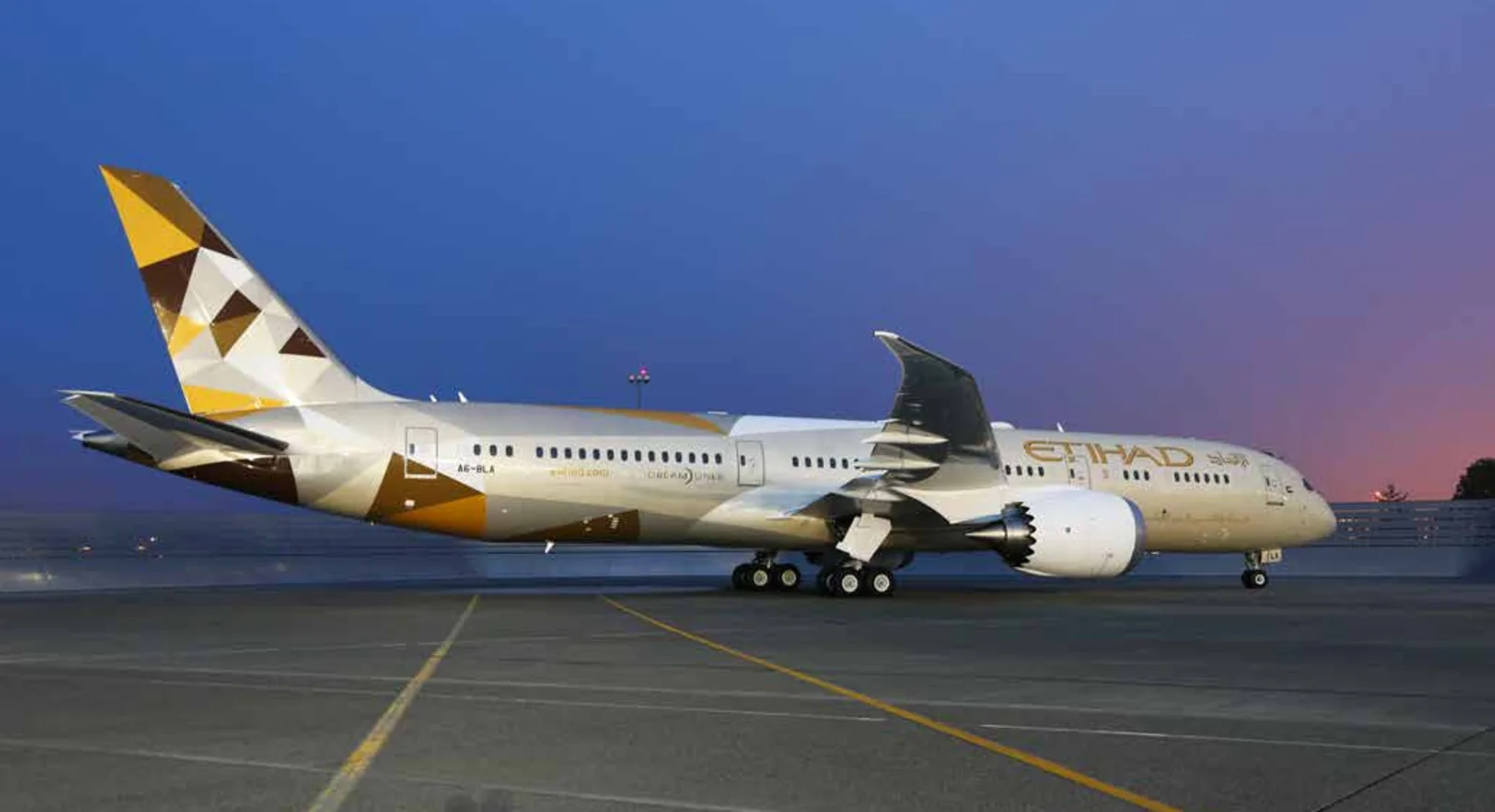
Etihad’s new branding arrived around the time we were building the portal.
The problem
Everything they used to phone about.
It all had to become something a guest could do alone.
A call to the service desk is expensive for Etihad, and that is
the whole business case: every task that moves into the portal is a call the
airline does not pay for.
A booking is rarely one flight, or one person. There can be a layover
in the middle, people on it entitled to different things, and a leg that
another airline operates.
Door to door — the lit steps are where a guest can change their flight in our portal.
The portal
What did I book, and what can I still change?
A guest comes back to a booking they already have, and that is the only thing
they want to know. The whole answer is one page — so nothing here opens
somewhere else and loses you.
The actions
Ordered by what to do, not by what exists. The next best action at the
top — here, check in. Then the four things people actually came
for: flight, seat, baggage, passenger details, taken from call-centre
feedback and earlier research into what people phoned about most.
Anything rarer folds into Other services.
The reassurance
Under the actions sits the flight itself, with its own way into the
detail. It opens in place, so you never lose where you were. That
was a friction point we took out.
Who is on it
An adult, a child, an infant. Baggage is per person, not per
booking: the three bags at 32kg are there because that guest is
Etihad Guest Silver, and the other two do not get them. One of the three
has no seat at all.
The legs
One spine down the journey: solid in the air, dotted on the ground,
with each layover carrying its own card. And every flight shows its
operator’s tail fin. The return out of Mahé is EY4118, flown by Air
Seychelles — so it carries their tail, not Etihad’s. You can see whose
aircraft you are on without reading a word.
One page, start to finish.
Then, the Arabic
A screen survives one language. Only a system survives multiple.
Left to rightRight to left
Turns over — layout, reading order, progress, anything that points at the next thing.
Changes shape — money and dates. The value holds, the writing does not: 1,000 or 1.000, currency before or after, day or month first.
Stays put — clock times, flight numbers, and the cabin. Mirror it and 32A becomes the opposite window of an aircraft that never turned around.
Arabic is not a translation job. Multiply it by Korean, by five regions — and
drawing screens stops being a plan.
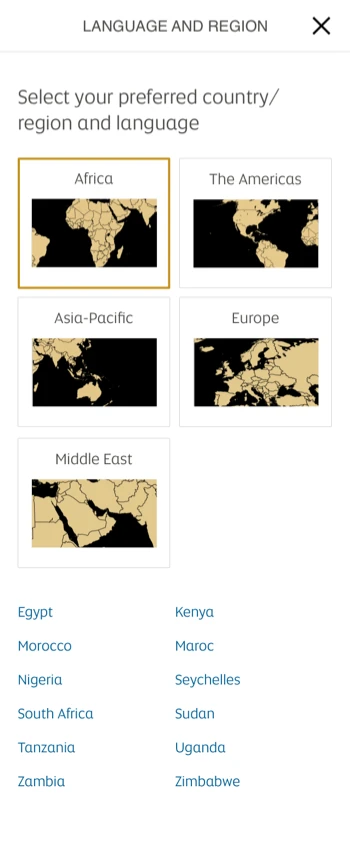
Africa, The Americas, Asia-Pacific, Europe, Middle East.
The hard simple thing
Every country list takes a position.
The portal asks where you are twice: once to set region and language, once
in a phone field that needs a country code. Both look like trivial form work.
A flag is a recognition, and recognition is what some of these states
withhold from each other. China does not recognise Taiwan. Which list you
use, what you call each entry, where a map draws a line — pick any of it and
you have taken a position on behalf of an airline, inside a dropdown.
So the design says as little as it can and still answers the question.
Five regions drawn as maps, plain country names underneath, no flags anywhere
on it. A day of arguing to arrive at something that looks like no decision at
all — and that a guest can still tap while standing up.
An example challenge
Seating a family, from the portal to the confirmation.
Seating a family was one of the journeys the experience maps turned up. So
I worked it out per screen: the flow it sits in, the job the guest is doing,
the priority guide. That is what went into the alignment sessions.
Pick anything on the map and it opens underneath.
The flow, the guides and the states are simplified from the originals — the same decisions, written for this case rather than for the team that built it.
1
From the portal
When I open a booking I have already paid for, I want to find the one action that changes where we sit, so I am not guessing which of five links has a map behind it.
1Carry the booking with you. Handing off to a seat map that starts empty makes the guest prove again who is travelling and on what — and a map that does not know the party cannot tell them when it has run out of seats together. The party, the flights and what is already chosen come along, so it is the same booking seen from another side.
2
Who still needs one
When I am seating my family, I want to see who still has no seat, so I am finishing a list rather than hunting around a map.
2The counter is the screen. Under the map it is a statistic; above it, 1 of 3 guests seated turns the whole task from finding a seat into finishing a list. The two dashes against the other names do the same work — an empty slot that looks unfinished.
3Name the person, not the passenger.Where would you like to seat Mary? is most of the design: it makes one decision at a time, about somebody. Passenger 2 of 3 is the same question asked by a system about a record.
3
The cabin
When the map opens, I want to tell the seats apart before I tap one, so I am not finding out what a seat costs after I have decided I want it.
4Price belongs on the seat. Collecting the charges at checkout is tidier to build and it means a guest picks a seat, grows attached to it, and meets the price at the till. Finding out at the end is how you lose the booking and gain a phone call.
5When the party cannot sit together, say so before they hunt for it. Three singles scattered down the cabin is a legitimate result, not an error — but discovering it one tap at a time is how a self-service booking turns into a call. The map offers the best it can actually do and names the alternative.
4
What it buys
When I tap a seat, I want to know what I am actually buying, so “extra leg room” becomes something I can picture before I pay for it.
6A number nobody can picture is not information.Extra leg room seat is a category, not an answer — it tells you what the airline calls it, not what you get. 78cm between you and the seat in front, with a photograph of that gap, is.
7Put the seat number on the button.Select seat 21B, not Select. The map is a grid of near-identical squares and the tap target is small, so the button is the last chance to catch a finger that landed one row off.
8An exit row is a responsibility, not an upgrade. Regulation requires the guest to be able and willing to operate the door, so this is the one seat on the map the screen is allowed to slow down. The conditions are read and accepted here — not buried in the terms at checkout, where nobody reads them and the crew finds out at the door.
5
The other flight
When everyone is seated on the way out, I want the return put in front of me, so I do not close the tab believing I am finished.
9Seats are chosen per flight, so finishing one does not finish the booking. A guest who has just seated three people has every reason to think the job is done, and nothing on the screen would tell them otherwise. The return sits directly underneath, collapsed but present, rather than somewhere they have to go and find it.
10The return is a repeat, not a second task. The party, the cabin and the choice just made are all still true on the next screen, so asking for the whole thing again is asking a guest to do the same work twice. One row offers the seats they already picked; the map stays open behind it for whoever wants something else.
6
Confirming
When I am about to pay, I want one total for the whole party across both flights, so I know what I am committing to before I commit to it.
11Total the party, not the seat. Seat by seat this is small money and every screen so far has shown it that way. A family across two legs is not small money, and the number that decides whether they go through with it is the one at the bottom.
12A declined card must not cost them the seats. Everything the guest has chosen sits behind this button — a party, two flights, six seats — and sending them back to an empty map is the most expensive thing this flow could do. The seats are held, the reason is named, and the only thing asked for again is the card.
13Confirmation has to say what changed. Which seats, for whom, on which flight — because the next thing this guest does is close the tab and trust it happened, and the only other way to check is to ring somebody.
Your bookingACJYMO · London → Mahé
Next best stepAbove the quick actions, because five equal links are not a recommendation
Seats for Mary and LindaThe one thing this booking is actually missing1
Quick actionsEverything else, at one weight
Modify flight
Select seat
Buy baggage
Edit passenger details
Other services
Your bookingACJYMO · Seats chosen for all 3
Next best stepIt moves on when the booking does
Check inOpens 48 hours before departure
Quick actions
Modify flight
Change your seats21A, 21B, 21C out · 14D, 14E, 14F back1
Buy baggage
Where would you like to seat Mary?London → Mahé
1 of 3 guests seatedAbove the map, not under it2
Everyone on this booking
21A · Mr John Forrest · 50 AEDExtra leg room seat›3
— · Mrs Mary ForrestTwo dashes, so the gap is visible›
— · Miss Linda Forrest›
Everyone has a seatLondon → Mahé
3 of 3 guests seatedThe same counter, finished — not a different screen
Everyone on this booking
21A · Mr John Forrest · 50 AED›
21B · Mrs Mary Forrest · 50 AED›
21C · Miss Linda Forrest · 50 AED›
Change any of themFinished is not locked
On to the return
Choose your seatLondon → Mahé
Your name, and the flightOne guest is not a list to finish, so there is no counter to keep
Straight to the thing itself
The cabin, open
The cabinThree-four-three, with two aisles
Told apart before you tap
Free · paid · business · takenFour states a seat can be in, told apart by drawing
What a paid one costs, on the seatBefore the tap, not after4
What else is on a cabin plan
Exit rows, lavatories, galleys
Row numbers down the side
21B has just goneTaken while this map was open
Said on the seat you reached forNot a dialog across the cabin you were reading
What the map does about it
21B redrawn as taken, where your finger already is
21C, free, same row, same price›
Nothing else on the booking is disturbedJohn keeps 21A; only this one choice is live
The cabinWhat you usually pick
Window, extra leg room — from your last four flightsWhere it came from, so it does not look like guessing
Marked on the map, not chosen for you
The seats that match, outlined
Everything else, exactly as it wasA preference is a shortcut, not a filter that hides the cabin
Stop suggesting this
No three seats together on this flightSaid before you go looking
The best this cabin can actually doTwo together in 32, one across the aisle in 32H5
What you can do with that
Take this arrangement
Seat them one by one myselfFor whoever needs to be next to whom
Look at the later flightThe honest option, named here rather than left to a phone call
Extra leg room seat21B
A photograph of the legroom itself
78cm between you and the seat in frontMeasured, not described6
50 AED
Select seat 21B7
Standard seat32C
Included — nothing to paySaid as plainly as the 50 AED is, so free does not read as lesser
76cm between you and the seat in frontThe same measure, so the paid one can be judged against it
Select seat 32C
Exit row seat31A
A photograph of the row and the door beside it
86cm, and 70 AED
What sitting here commits you to
Able and willing to operate the doorRead here, where the choice is made8
Over 16, and travelling without an infant
I have read this and it applies to me
Select seat 31A
Anyone on the booking who does not qualify, said hereNow, rather than by the crew at the door
Both flightsSeats are chosen per flight
London → Mahé
3 of 3 guests seated
Mahé → London
Show seats for this flightCollapsed, but present9
0 of 3 guests seatedThe same counter, so the gap is the same shape as the one just filled
Mahé → LondonSame party, same cabin
The seats you picked on the way out, offered back21A, 21B, 21C · 50 AED each on this flight too10
One tap, or not
Put everyone in the same seats
Open the map insteadThe offer never closes the door on choosing
If one of them has gone, it says whichSo a part-match is not presented as a whole one
Both flightsNothing left open
London → Mahé
3 of 3 · 21A, 21B, 21C
Mahé → London
3 of 3 · 14D, 14E, 14F
Continue
Before you continueAcross the whole booking
What is being bought
Seat, guest and flight, line by line
Total amount · 300 AEDSix seats across two flights — the party, not the seat in front of you11
Continue
That card was declinedYour seats are still yours
The six seats, heldSaid first — it is the thing they are afraid of12
What actually happened
The bank refused it — Etihad did notNamed, so the next call is to the right place
Nothing has been charged
Only the card is asked for againNot the seats, not the party, not the flights
Try another card
ConfirmedACJYMO · 300 AED paid
London → Mahé
21A John · 21B Mary · 21C LindaWhich seats, for whom, on which flight13
Mahé → London
14D John · 14E Mary · 14F Linda
Sent to the email on the bookingSo closing the tab is safe
A priority guide settles what a screen is for before anyone argues about how it looks.
What I learned
I thought I had the room.
I had the product owner’s agreement and took it for the board’s. At the
presentation it turned out he did not speak for them. The work was set
aside and we started again.
So stakeholder mapping is now the first thing I do on any project:
who actually signs this off, who only sounds like they do, and what each of
them needs out of it that is nowhere in the brief.
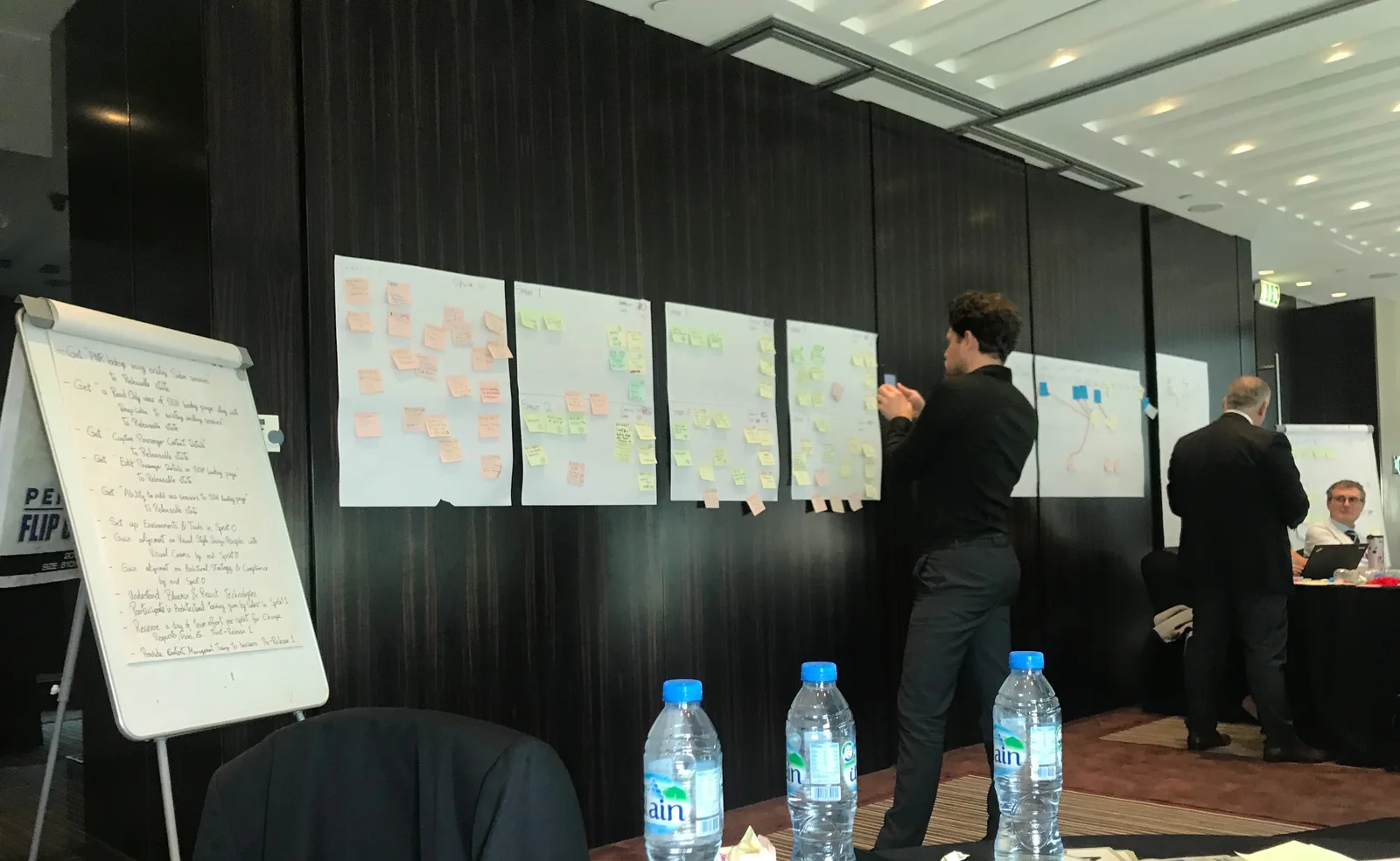
Two months on site.
Colleagues came from the UK, India, the UAE and further, each with a different working culture.
Next
KLM — paperless maintenance.
400+ iPads for aircraft technicians who were sure they were getting
something worse than paper.